Sainte-Anne-de-Beaupré
Le Cyclorama
Speaker: Hélène Jasmin
When: Thursday, October 16, 2025, 19:30 - 21:00
Where: Herb Linder Annex
303 Beaconsfield Blvd, Beaconsfield, H9W 4A7
P.S. The access to the Herb Linder Annex is through the parking lot in the back of the City Hall and Library building. The door is by the Lawn Bowling fence at the end of the parking lot.
Lecture in French followed by a bilingual question period
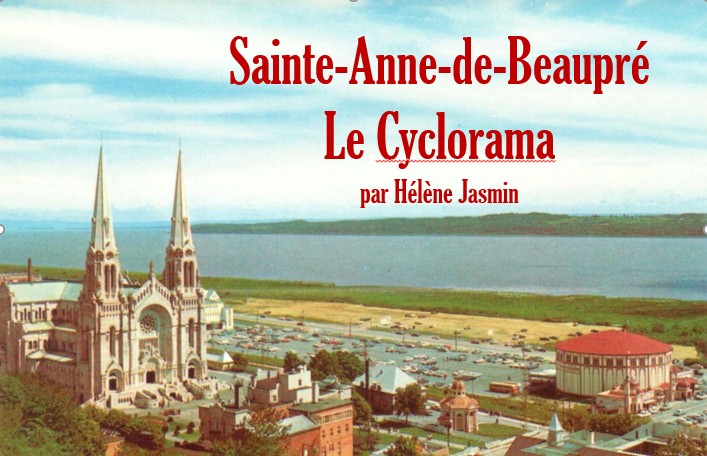 The Jerusalem Cyclorama, a tourist site of invaluable heritage and artistic value, continues to inspire admiration from visitors of all faiths. This cyclorama is the largest in North America, measuring 14 metres high and 110 metres long.
Inaugurated in Montreal in early 1889 during a large exhibition, then relocated to Sainte-Anne-de-Beaupré, the building had to close in the fall of 2018. The following year, the government of Quebec designated it as a heritage monument. Today, visits have resumed, in small groups
This 360-degree painting was originally admired in Montreal (at the corner of Sainte-Catherine and Saint-Urbain, now the Place des Arts). A unique work in Canada. We are in the era of 'panoramas', long before film projections.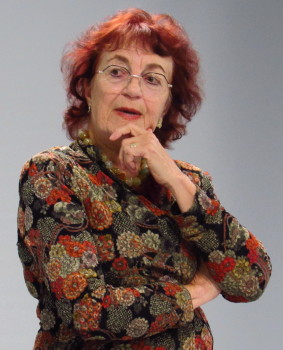
Hélène Jasmin, author and speaker, was educated at UQAM in Sociology; at École de radio-télévision Pierre Dufault in Montréal; and Violin private class with Master Eugène Bastien, member of MSO. Her professional experience includes: freelance journalist for manyspecialised newspaper: Le Compositeur canadien, OUR CANADA; freelance radio program host, Radio-Canada FM, Montréal; assistant curator for different exhibits; author of books on the history of theatre, arts and gardening, including on Elsie Reford, Frédéric Back and Père Émile Legault. She is Vice-President of the Quebec cultural enterprise La Belle Amérique.
==========================================================
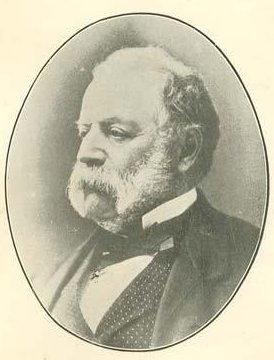 Charles Wilson (1808-1877) was a prominent Montreal businessman and politician, best known as the city’s mayor from 1851 to 1853. In 1852, he became the first mayor directly elected by those eligible to cast their votes. However, Wilson’s political success and popularity were short-lived. Governing Montreal during the 1850s was not an easy task and, in a city marked by intense ethnic and religious strife, Charles Wilson could not avoid becoming a polarizing figure.

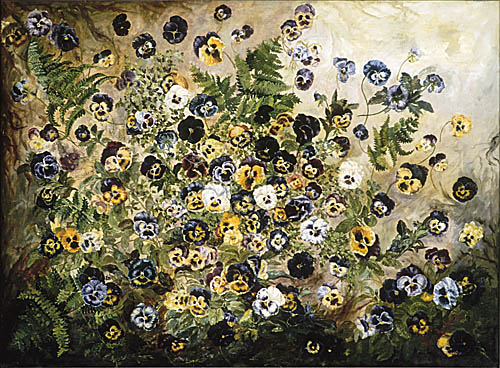 Montreal had very talented women painters in the 1920s, like those associated with the Beaver Hall group. Few people know that there were dozens of women painters in the late 19th century who regularly participated in the annual exhibitions of the Art Association of Montreal. Many of them had works which were included in the exhibitions of the Royal Canadian Academy of Arts. Their work has been mostly lost and there is next to nothing written about them. New research tools in genealogy now enable us to learn more about them, a fascinating discovery. After sharing some rare photos of their works and the artists themselves, Lorne Huston will give an overview of the demographics of their situation and their careers.
 Lorne Huston holds a PhD in history from Concordia University and a Master's degree in Sociology from the Université de Montréal. He has been doing research on the history of the arts sector in English Montreal since he retired from active teaching at Cégep Édouard-Montpetit in 2010. In addition to the book he co-authored with Marie-Thérèse Lefebvre on the Montreal musicologist, George M. Brewer, he has also written articles on the Art Association, and on Samuel Morgan-Powell, art and drama critic at the Montreal Daily Star (1913-1953).
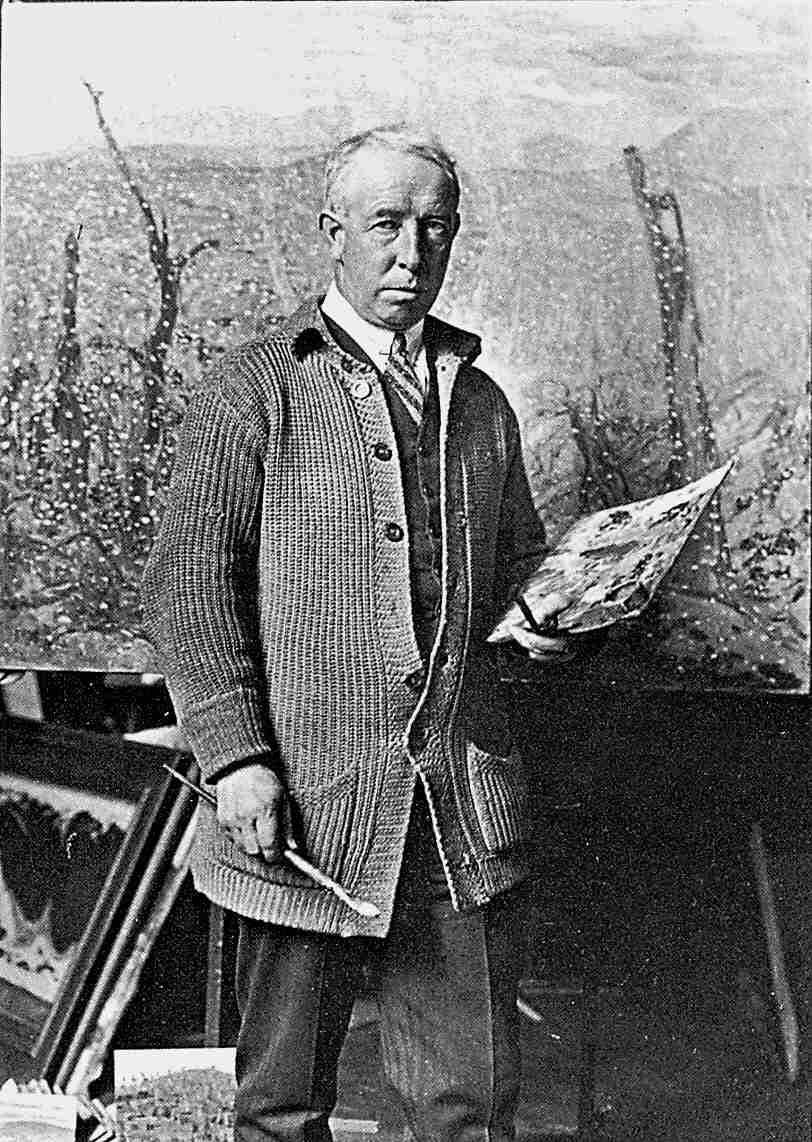 This illustrated presentation follows one of Canada’s most beloved characters, from his impoverished Montreal childhood to national recognition as an outspoken champion of modern Canadian art. Best known as a founding member of the Group of Seven and Beaver Hall Group, A. Y. Jackson spent nearly 70 years travelling across Canada to paint its vastly different landscapes, battling harsh weather and hostile art critics along the way.
 Let us pause for a conference to look at the history of the main bridges that have contributed to making Montreal the important place of trade, cultural and social exchanges that it has become. Because, although they are often a source of irritation for motorists, they were and still are essential witnesses of the evolution of the city!
 A graduate in Education Sciences from the Université de Montréal, Ginette Charbonneau was an animator for the Service des Arts et de la Culture of the City of Saint-Eustache for many years. History enthusiast, co-author of a book on genealogy and family history, coordinator for ten years and one of the contributors to La Feuille de chêne, the periodical review of the Société de généalogie et d'histoire de Saint-Eustache, she offers conferences and courses, meticulously documented and accompanied by relevant visual presentations. She has been teaching at UTA (Université du Troisième Âge, Faculté d’éducation, Université de Sherbrooke) since 2010. Her passion for history, as well as her experience and interest in research, documentation and communication, led to her desire to share the knowledge she had acquired.
 Our speaker, Robert N. Wilkins, will highlight different events of 1885 in Montréal, including the Winter Carnival, the Election of Honoré Beaugrand as Mayor of Montréal, the Spring Floods, the Smallpox Epidemic and the Hanging of Louis Riel.
 Why does young, reform-minded lawyer George-Étienne Cartier join an armed uprising, only to later reject violence as the way to achieve responsible government in this country? In 1837, Lower Canada seethes with discontent. After savage rioting in Montreal between hardline loyalists and dissident radicals, there is no turning back. Cartier, a future Father of Confederation, commits himself to rebellion against the Crown. At Saint Denis, Saint Charles and Saint Eustache, poorly armed Patriotes find themselves in pitched battles against the most disciplined army on the planet, battles that echo to this day.
 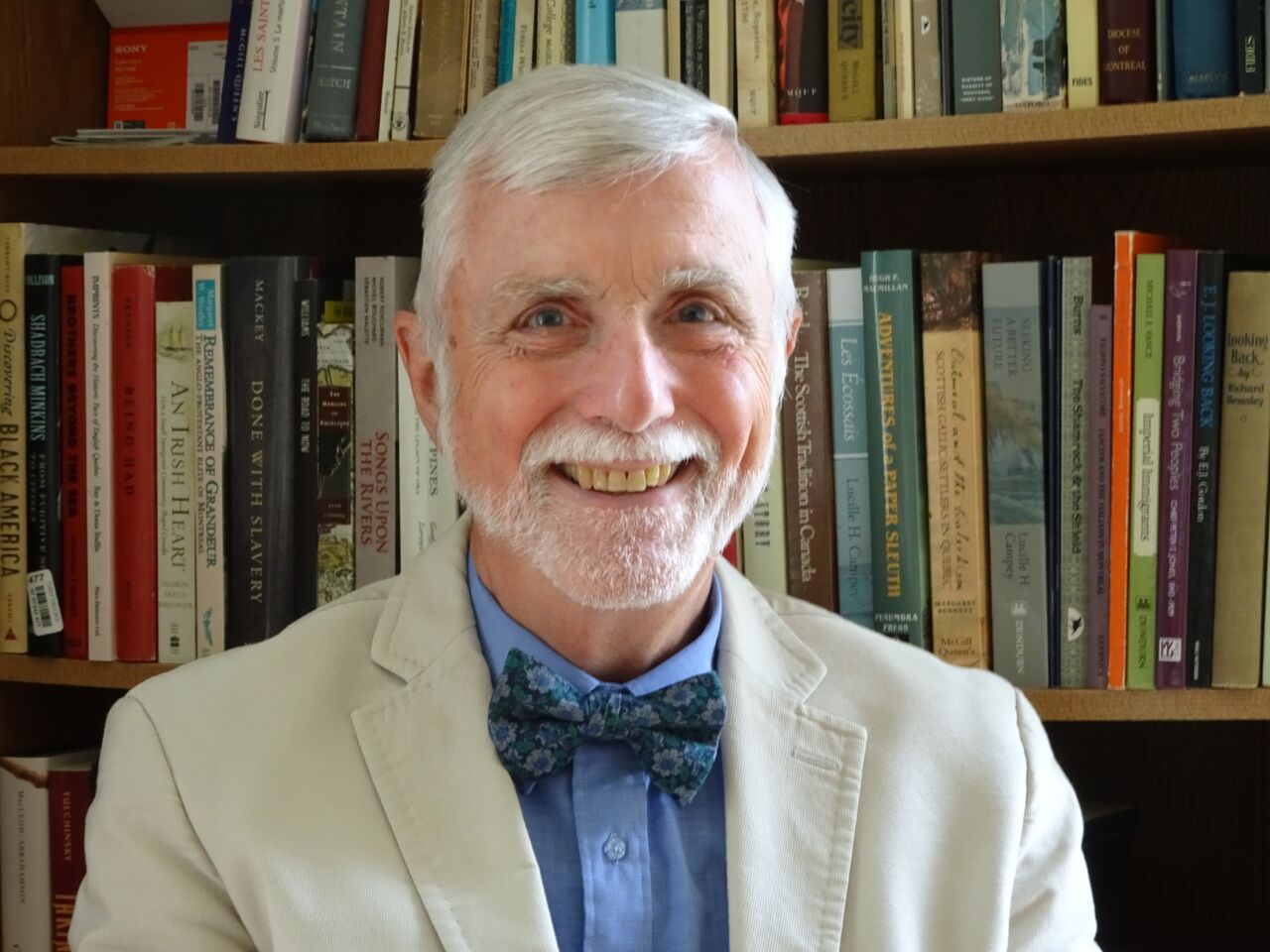 Longtime journalist John Kalbfleisch wrote a Montreal Gazette column on the city’s history for seventeen years. His novel The ’37 was published early 2024. He is also the author of No Place More Suitable: Four Centuries of Montreal Stories (2018), A Stain Upon the Land (2017), Le cadeau royal: Histoire de la ville de Mont-Royal / The Royal Gift: a History of Town of Mount Royal (2013) and This Island In Time: Remarkable Tales from Montreal’s Past (2008), and is co-author of Montreal’s Century: a Record of the News and People Who Shaped the City in the 20th Century (1999).
 Christ Church Beaurepaire was established in 1924. Our speaker, Michael Silverthorne, member of this Church, will talk about the first 100 years of this Anglican Church.